
Stories
The Hurricane Helene Archive brings together a collection of media contributed by community members, researchers, and historians. Use this page to explore firsthand accounts, images, and documents that offer insight into the storm, its impacts, and recovery efforts.
- 📖 View Help
-
- View a Story: Click on a story to open it up and view its details and media.
- Sort the Archive: Click Sort to arrange stories by creation date or alphabetical order.
- Advanced Search: Click Advanced Search to narrow results by various dimension options.
Do you have a story or item to add? Contribute Your Story
Please help by sharing these stories.
-
The Aftermath of Hurricane Helene
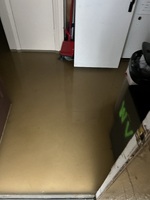 UnknownI remember Hurricane Helene very vividly. In the days leading up to the hurricane, I had no idea it was going to be as bad as it was. I hadn’t really been watching the news, and my mom kept texting me updates about the storm. Mind you, my family lives in the Wake Forest–Raleigh area. I remember telling her, “Don’t worry about me, I’ll be fine.” She would text me incessantly again, I had no idea it was going to be as bad as it was. Nobody did. I brushed it off, thinking it was just going to be a short rainstorm. But little did I know the devastation that would follow. The night before, I didn’t think to get bottled water, non-perishables, or anything like that. All I had bought was toilet paper. I was ignorant. As anxious a person as I am, I’m usually much better at planning for the worst. This time, I wasn’t. And this time, I dealt with the consequences. The morning of September 27, my roommate and I woke up to a flooded basement. Our power had gone out. We were without food, water, or electricity. At that point, we began collecting rainwater just to have something to drink. We couldn’t call or text our families. We were completely disconnected from everyone, just the two of us, waiting for the storm to blow over. Around 4 p.m., the rain finally stopped. My roommate and I went outside to assess the damage. To the right of our house, the road above ours had collapsed, causing a major landslide that spilled into the middle of our street, blocking us in. The basement of a house below ours had flooded about five feet. The students living there had to break a window to let the water escape. Looking in the other direction, to the left of our house, a power line hung dangerously in the middle of the street. The wind had knocked over a tree, which had landed right on it. After seeing all the destruction Hurricane Helene had caused, my roommate and I began trying to clear the road so we could leave the neighborhood in search of food and water. A few of our neighbors were doing the same. As we tried to clear debris from under our car with a snow shovel, a college student from across the street approached us, asking for help. The poor guy looked pale, was shivering, clearly hungry, and dehydrated. He said he didn’t live at the house and that he was just staying with his buddies. They had no food or water, and he asked us for a ride. His car had been completely demolished. Debris, including a ping pong table, had been lodged underneath it. He couldn’t get out. His car had been parked at the house with five feet of flooding in the basement, so I could only imagine what it looked like. My roommates and I were fortunate to have only five inches of flooding. We lived in a duplex on a hill my roommate and I lived upstairs, and our two other roommates (two guys) lived on the bottom floor. Eventually, we cleared the debris from beneath our car and went in search of any places that might be open. Once we saw that there was power on campus, we stopped at The Market. Sheetz was open too, so that became our second stop, before taking the guy we helped back home. The next day, not knowing when our power would be back, I packed my things and left to stay with my family for the next few weeks.
 -
Blairmont Lake
 UnknownThe experience was truly wild. Being located above the floodplain and the greenway as well as right next to the hospital I often figured the storm would kind of pass us over. The storm never fully picked up until the morning of Thursday. When I woke up the water had risen another 10 feet nearly. It had to have been well over 20 feet from the floodplain. During the storm I was able to witness countless cars going by, gazebo’s, trees and so forth. It truly put the storm into perspective. I consider myself extremely fortunate to be in the area that I was in. As flat and open as the golf course was allowed the water to pass us over without decimating bridges, homes and other larger structures. The water had a way to go. I remember the water coming up over barns and well over the tops of road signs. It was also wild that no one else could have experienced what I did in that area. Everyone had a different view and situation. Standing by helpless watching everything pass was painful. Quickly after the store I remember checking on the houses close by and in the flood zone. The water and mud did not leave for months. The power lines remained across the road for up to two weeks. Being so close to the hospital I figured we would receive power quickly but it was out for a few weeks. Despite the storm I have never felt closer to my neighbors and to my community. It truly opened my eyes. Additionally going to Spruce Pine a week after to deliver supplies it blew my mind even more. There were steel I beams for factories or warehouses that were twisted like a bread tied around a 50 ft bridge, the water had come well over the top. Seeing the place that I had spent so much time visiting receiving it considerably worse than myself was hard. A bit of survivors guilt. The same for the Watuaga river past valle crucis. The flood plains truly saved my life and those around the main rivers were not so fortunate. It was heartbreaking. The video was used by some students down the mountain in Charlotte and Winston for school newspapers as the view was so alarming. It put the amount of water into perspective. I cannot imagine having being on a bend or river location.
 -
Apartment Destruction
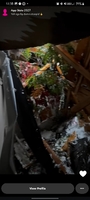 UnknownAt 5am on the day the hurricane first hit Boone, I felt my building shake as if an earthquake had struck. The noise was so loud I thought a bomb had gone off. A massive oak tree had completely destroyed half our apartment building, and we ran out of our room as we were hearing screaming coming from where the tree had struck. I pulled out guys from one of the apartments, and I saw that part of the tree had skewered through his bed. He was unharmed, which was a miracle from God. I will never forget that day.
 -
Interview of Caleb Hignite - BRAHM listening day - Sept 20, 2025
 UnknownThis interview captures the powerful story of Caleb Hignite, a folk musician and ethnomusicologist who transformed his deep connection to Appalachian culture into a mission of documentation and advocacy following Hurricane Helene. From his roots in folk music and banjo playing to his extensive photographic documentation of the storm's aftermath, Hignite shares his experiences of witnessing devastation in rural communities like Mitchell County's Green Mountain and Red Hill. The conversation explores how traditional music provided solace during recovery, his work with the Appalachian Reclamation Alliance, and his belief that we are currently experiencing the fourth major folk revival movement in American history—one born from societal tensions and the need for authentic cultural connection.
 -
Interview of Jim and Joyce Zellner - From BRAHM Hurricane Helene Listening Day in the High Country. Sept 20, 20205Jim and Joyce Zellner, Florida transplants who moved to the mountains of North Carolina 13 years ago, share their experience of Hurricane Helene's devastating impact on their property along Flannery Fork Creek. Despite their extensive hurricane experience from decades in Florida, nothing prepared them for watching their peaceful creek transform into a raging torrent that rose 10 feet in just three hours, flooding their party barn and isolating their community for weeks. This oral history captures their harrowing account of the storm's immediate impact—from frantically moving oriental carpets to higher ground to watching trucks and propane tanks float past their windows—as well as the long recovery process that consumed two years of their lives. The Zellners reflect on the power of community response, the emotional toll of witnessing widespread destruction, and how this mountain hurricane differed from their Florida storm experiences. Their story illuminates both the vulnerability of mountain communities to extreme weather and the resilience found in neighbors helping neighbors through unprecedented disaster.
-
Interview of Heather Higgins - Hurricane Helene Listening Day in the High Country - Sept 20, 2025UnknownAudio from BRAHM - Hurricane Helene Listening Day in the High Country Heather Higgins a resident of western Watauga County, shares her deeply personal account of Hurricane Helene's impact on her life and community. Living alone in a working-class area, Heather was dealing with her dying dog when neighbors gave her just 30 minutes to evacuate before roads became impassable. Her story captures the complex emotions of survival—from initial gratitude for being spared major damage to guilt over her neighbors' greater losses, and the lasting depression that followed. The interview reveals the uneven distribution of disaster impact within communities and the psychological toll of witnessing widespread destruction. Heather's experience highlights the isolation many felt when outside help was slow to arrive, leaving communities to rely entirely on each other. The centerpiece of her testimony is a haunting journal entry she wrote months after the storm, a poetic reflection on how the disaster transformed both the physical landscape and her emotional connection to the mountains she calls home. Her words capture the lasting trauma of watching "beauty buried beneath the rubble" and the ongoing struggle to process profound change in a place that once provided spiritual sustenance.