
Stories
The Hurricane Helene Archive brings together a collection of media contributed by community members, researchers, and historians. Use this page to explore firsthand accounts, images, and documents that offer insight into the storm, its impacts, and recovery efforts.
- 📖 View Help
-
- View a Story: Click on a story to open it up and view its details and media.
- Sort the Archive: Click Sort to arrange stories by creation date or alphabetical order.
- Advanced Search: Click Advanced Search to narrow results by various dimension options.
Do you have a story or item to add? Contribute Your Story
Please help by sharing these stories.
-
Interview with Priscilla Dunn
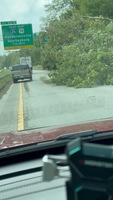 UnknownPriscilla Dunn, a Hickory, NC local and Appalachian State University Alumni had a unique Hurricane Helene story. Her son in law had an emergency surgery in Knoxville. She was coming back to Hickory from Knoxville to assist her daughter. The rivers were raging beside the roads. Then, she got stuck in a landslide on Black Mountain. She turned around to go back to Knoxville, and the Swannanoa River was 10 ft over the interstate. Pricilla stayed the night in Asheville because the police and firemen were overworked. She drove to Spartanburg the next day and then went through Charlotte to get home. She had driven the wrong way on the interstate, drove over power lines, tree branches, and swerved around them. But she also created a community for her own needs and for the needs of others.
 -
faith through the flood
 UnknownI am in my undergradute and my major is communication
 -
A PA Student's Helene Expirience
 UnknownI interviewed Abby Murphy on her experience as a PA student in Boone NC during Hurricane Helene. I have submitted the interview audio file along with a transcript of the interview.
 -
The Bay of Sugar GroveUnknownLocals look out at the astonishing flood in the valley of Sugar Grove (near Watauga Bridge). During normal times, the river meanders through a small portion of that valley and stays at about 20 feet beneath that bridge. It looks more like a bay than a river valley.
-
Interview with Henna WallaceInterview on 10/5/2025 at the River of Us Festival in Trade, TN
-
Jackie Mace and her story of "Chaos"UnknownInterview Summary Participants ~ Dylan Jackson, Interviewer: Public Relations and Public Health major at Appalachian State University Jackie Mace, Interviewee: VP of Market Operations at Hopscotch Primary Care in Western NC Background and Introduction ~ Jackie has lived in Appalachia for about 10 years, moving from Minnesota to Maggie Valley and currently residing in the Marshall area. She works as VP of Market Operations for Hopscotch Primary Care, managing 11 clinics across Western NC. Her husband works for Buncombe County Schools. Pre-Hurricane Community Life for Jackie ~ Jackie described her community as close-knit but initially difficult to break into as a newcomer. Moving to the area in her 40s without a local support network was challenging, but her husband's local roots helped her integrate. Before the hurricane, the community already had a strong culture of mutual support and resilience. Experience During Hurricane Helene ~ Jackie had never experienced a disaster on the scale of Hurricane Helene. The most impactful aspect of the entire situation was the human response: neighbors and colleagues supporting each other with limited resources. The Hopscotch team, including out-of-state staff, worked together to check on employees, set up temporary infrastructure (like water tanks and porta-potties), and provide essential supplies to staff and patients. Jackie shared stories of extreme generosity, like a colleague who lost everything but still helped others. Personally, Jackie and her husband were without power or water for eight days. Their neighbors and family provided what they could, and the community rallied around each other. One powerful moment for her was relying on a small battery-powered radio, her only lifeline to the outside world, for storm updates and community news. Aftermath and Reflection ~ Jackie emphasized how the experience changed her perspective on life. Material things became less important; relationships, community, and mental well-being took center stage. She noticed increased friendliness and intentionality in her community since the storm, more casual conversations, more neighborly gestures, and deeper human connection. Jackie described her overall experience with Hurricane Helene in one word: chaos, but a chaos that revealed deep human resilience and unity. Interview Key Takeaways and Themes ~ Community Resilience: Despite widespread devastation, the community came together in extraordinary ways. Organizational Response: Hopscotch Primary Care prioritized employee well-being and patient care even amidst infrastructure collapse. Personal Growth: The storm served as a turning point for Jackie, reinforcing life priorities and personal strength. Preparation Lessons: Small tools like a radio made a massive difference; the experience emphasized the importance of being prepared and flexible in crisis situations.
-
Tyden Household Hurricane Experience
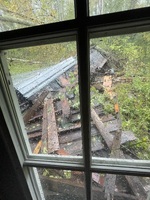 UnknownI am a graduate student who goes to Appalachian State University and who also attended undergraduate school here as well. My partner and I had lived in Zionville for almost a year at the time when the hurricane hit. We are surrounded by people who keep Boone going—not by students. Our neighbors are families, retired couples, and farmers; we are the oddballs out here. We live with our two pets, a cat and a dog. When the hurricane hit hardest, it was in the night. I remember our AC going out. We live in an old cabin with no central AC or heat—we have a wood-burning stove for heat and in-unit ACs for summer. When the AC went out, it got hot quickly. I somehow went back to bed, but then was awoken again by a giant crash. I woke my partner, and we moved ourselves and the pets downstairs to the futon. At this point, our power was fully out, and it was hot and stuffy upstairs. We all ended up falling back asleep. When it was finally daylight, we were able to see what the big crash outside the house had been. An old shed behind the house had fallen during the night, but thankfully it hadn’t fallen on us. A thin tree had also fallen onto the porch but hadn’t damaged the house. We stayed inside for most of the day until the rain let up. My partner had a satellite phone, so we were able to contact our families to let them know we were safe. A thin tree was blocking our driveway, but we ventured out with our dog anyway. We checked on our neighbors, who were on their way to check on their church, which had apparently flooded badly. Another neighbor came by, soaked head to toe, to grab a chainsaw to help someone else. Across the way, our neighbor’s farm had turned into a river, and his cows had wandered into the hills, though they were safe. A whole trailer had been torn to pieces, and cars were floating by. People sped past on dirt bikes and four-wheelers, hollering to make sure we were okay. Construction equipment from people’s farms was already on the road, trying to clear the way. Farther down the road, we came to the flower farm, which was decimated. Their farm stand was gone, and the road was destroyed. On our way back home, several people told us there was only one way out, so we listened closely and took note to remember. Luckily, our neighbor across the way was a retired lineman, and the one next to us was a current lineman, and they warned it would be a long time before power came back on. So we decided the next day we were going to hack our way out of there and try to get through in our Prius. And miraculously—we did.
 -
(none)UnknownI woke in the dark water dripping in my bedroom, no electricity, my phone blinking low battery, no one beside me. Outside, the wind howled, rain slammed the windows. Inside, silence except the water rising to my ankles. My apartment, drowning. What should I do? How do I reach someone? How do I ask for help? I opened the door the storm stared back, wild and unforgiving. I packed a few clothes, stepped into the unknown, heading to my friend’s house. The road was passable, but the world had changed. Cows once grazing now swimming. Trees, homes submerged. I lost my place. Can I return? What about my things? What about my life?